Engineering
Hookpipe: Webhook Reliability and Delivery Assurance
Trace every webhook from receipt to outcome. Hookpipe gives teams a searchable event ledger, delivery history, safe retries, and replay context to investigate failures with confidence.
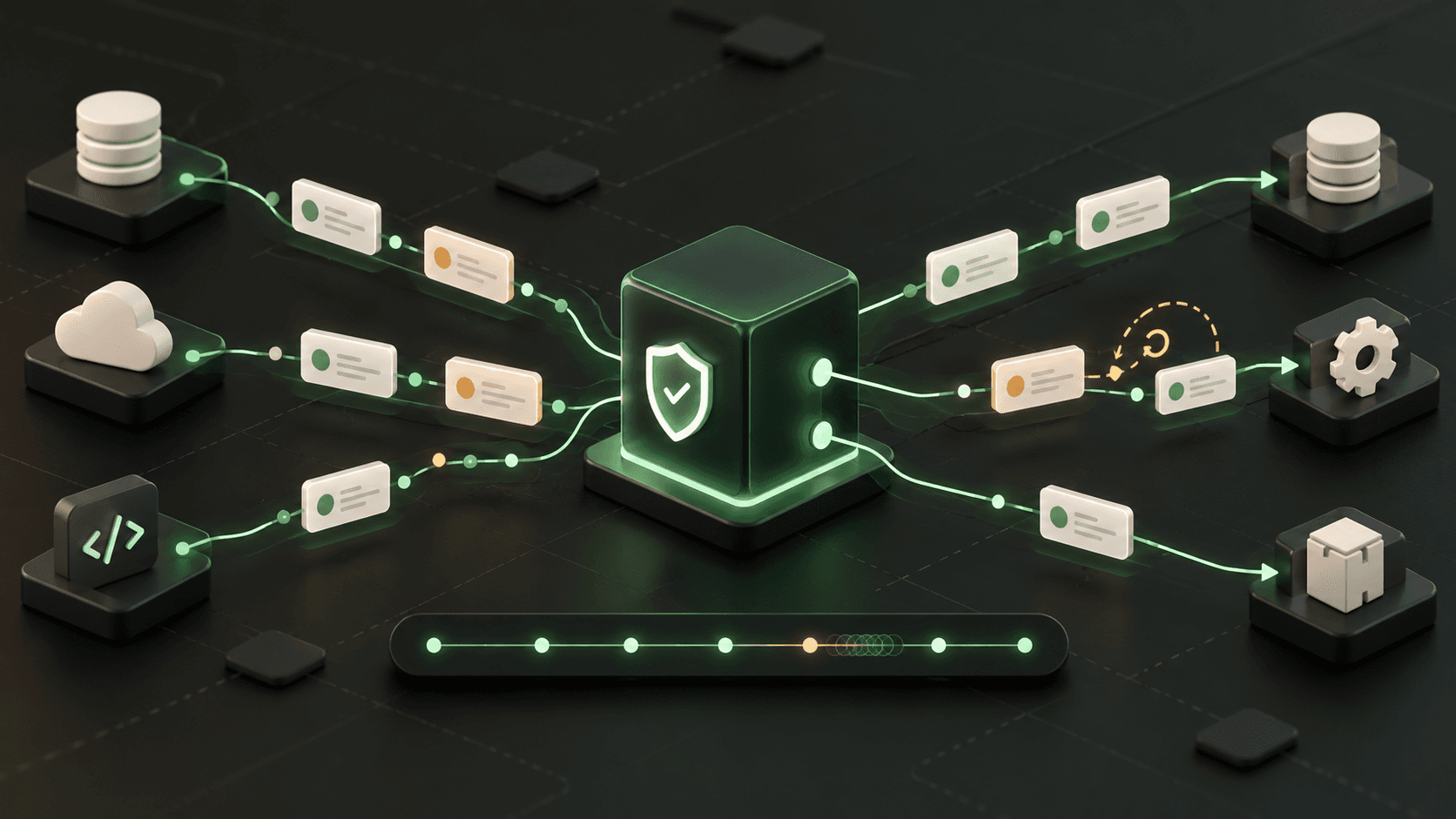
Webhook integrations keep products connected, but delivery failures are difficult to diagnose when event history is scattered across providers, queues, and application logs. Hookpipe gives teams one place to trace a webhook from receipt through verification, routing, and delivery.
What is Hookpipe?
Hookpipe is a webhook reliability and delivery assurance platform. It records incoming events in a searchable ledger, shows how each delivery progresses, and keeps the context teams need to investigate failures and recover safely.
Instead of treating a webhook as a single HTTP request, Hookpipe helps you follow the event lifecycle: what arrived, how it was handled, which destination received it, and what happened on each attempt.
Follow the full webhook journey
When an event arrives, teams need enough detail to understand its path without piecing together unrelated logs. Hookpipe brings the event and its delivery history together so engineers can:
Inspect event payloads and request metadata while investigating an integration.
Search a shared event ledger to find the webhook related to a customer or operation.
Review delivery attempts and response details to locate where processing failed.
Apply routing and preprocessing rules to validate, filter, or transform events for downstream systems.
Replay an event with its history available for later troubleshooting.
This visibility is useful during development and production operations alike. Teams can see whether a provider sent an event, whether the receiver responded, and where additional application-level investigation is needed.
Understand failures and recover with context
An HTTP 2xx response confirms that a receiver returned success at the transport layer. It does not, by itself, prove that a downstream business action—such as updating an order or provisioning an account—completed correctly. Keeping delivery status and application outcomes distinct helps teams avoid false confidence.
When a delivery fails, its attempt history and event context make the next step clearer. Engineers can inspect the response, correct the destination or processing logic, and replay the event while preserving its relationship to earlier attempts. That context makes recovery easier to review and reduces the guesswork of manual retries.
Who uses Hookpipe?
Hookpipe is designed for product and engineering teams that depend on webhooks from payment, subscription, commerce, identity, or SaaS providers. It is especially useful when several services exchange events and teams need a dependable way to answer: did the event arrive, where was it sent, and what should we do next?
Whether you are integrating your first provider or operating many event-driven workflows, a shared delivery history can shorten investigations and make webhook behavior easier to explain across the team.
Start tracing your webhooks
Bring your webhook endpoints into Hookpipe and use the event ledger to inspect delivery activity, diagnose failures, and replay events with useful context. Visit Hookpipe to get started.
Frequently asked questions
Does a successful HTTP response guarantee the event was processed?
No. It shows that the receiver returned a successful HTTP status. Confirming the business operation may require checking the receiving application as well.
Can I inspect earlier delivery attempts?
Hookpipe keeps delivery history with the event so teams can review attempts and investigate what happened before deciding how to recover.
What kinds of integrations can use Hookpipe?
Any system that sends or receives webhooks can fit this workflow, including payment, commerce, subscription, identity, and SaaS integrations.